









Why your heat pump makes noise in a South Dakota winter

Step 1 of 3: Equipment

A heat pump that bangs, buzzes, or hisses in a South Dakota winter is usually icing over and fighting its own defrost cycle. Cold, damp air builds frost on the outdoor coil, and the system switches into defrost mode to melt it off before switching back to heating. That switch is what you hear: a thump or hiss as the reversing valve changes direction, or a buzz from the fan or motor working against the extra load of ice. In a winter this cold, defrost runs happen often, so the noise can show up several times a day. A little of this is normal. What is not normal is grinding, screeching, or a noise that keeps happening after the frost should have cleared, since that usually points to a failing motor, a loose part, or a valve that is not seating right. Left alone, that kind of wear tends to get worse before it gets better.

An outdoor heat pump unit on a concrete pad beside a house corner, with a small electrical box and conduit on the wall, gravel border, grass, and a plain light-colored wall filling the right side.

Defrost Mode Makes Its Own Noise

When your heat pump goes into defrost, it reverses the refrigerant flow to send heat outside and melt the frost off the coil. That reversing valve makes a clunk or a hiss when it switches. The outdoor fan also stops during defrost, so the sound changes from a steady hum to something quieter underneath the hiss. This is normal. It usually runs ten minutes or so before the system switches back to heating.

A grey outdoor heat pump unit on a concrete pad beside a white stucco wall and dark siding with a downpipe, with gravel and grass in the foreground.

A Loud Bang Means Ice Won

If frost builds faster than the defrost cycle can clear it, ice sheets across the coil fins and the outdoor fan blade can start hitting ice as it turns. That is the bang or rattle that gets your attention. A dirty coil, a low refrigerant charge, or a failing defrost sensor can all keep the system from clearing itself, and the coil keeps icing over cycle after cycle until something gets damaged.

A closed silver laptop and a ceramic mug of dark coffee sit on a wooden table in front of two chair backs, with a kitchen counter, tiled backsplash, wooden cutting boards, a vase of greenery and a potted plant by a window behind.

The noise tells you the defrost cycle is working harder than it should

You'll hear it most on the cold nights, when the unit outside is cycling into defrost every hour or so instead of every ninety minutes. That's more wear on the reversing valve and the outdoor fan, and it's pulling more power each time it runs, even with your rates as low as they are here. If the noise is new, something changed: a sensor reading wrong, a fan motor losing strength, a coil that isn't melting clean before the system switches back. Left alone, a heat pump that can't finish a defrost cycle properly will lean harder on backup heat to keep your house warm, and that's the expensive way to stay warm in a South Dakota winter.

You already know to look into a noise like this before it becomes a bigger repair. What you don't want to spend your evening on is finding someone qualified to look at it, calling a few places, explaining the clunking and hissing twice over, then sitting on quotes trying to figure out who's worth the call back. Send the details once and that part of it is off your plate. Someone who works on these systems takes it from there.

A living room corner with a light beige sofa holding a textured taupe cushion, a large ceramic vase of olive branches by a window, a framed neutral artwork on the wall, and a dark bowl with stacked books in the foreground.
A smiling man in a gray long-sleeved shirt stands in a kitchen looking to the side, with open shelves of dishes, a white mug on the counter, a potted plant, and a view through a doorway into a living room.
A smiling bearded man in a green sweater sits at a white marble kitchen island with a mug, potted plant and bowl of fruit, in a bright white interior with open shelving and an arched doorway.
A smiling man with dark curly hair and a beard, wearing a dark green knit sweater, stands at a white marble kitchen counter with a dark blue mug, with open shelving, pendant lights and a houseplant behind him.
A smiling man in a green ribbed sweater stands behind a wooden table holding a ceramic mug of coffee in a kitchen with white subway tile, shelves of potted plants, and a bowl of fruit.

Normal Defrost Or Needs A Look

Normal Defrost

  • The clunk or hiss happens roughly once every ninety minutes and lasts a few minutes before the outdoor fan starts back up.
  • The sound comes and goes with the outdoor temperature, showing up more on the coldest nights and barely at all above freezing.
  • Steam or light fogging off the outdoor unit right after the noise is the frost melting off, not a sign of a leak.
  • The indoor air feels cooler for a few minutes during defrost because the system is briefly running in cooling mode to reverse the coil.
  • Once the cycle ends, the unit returns to its usual low hum with no rattle, grinding, or metal-on-metal sound left behind.

Needs A Look

  • Defrost is kicking in every hour or less, which means the outdoor coil is holding more frost than it should between cycles.
  • The noise is sharper or louder than before, or it's joined by a rattle or grinding that wasn't there last winter.
  • The outdoor fan doesn't restart after the clunk, leaving the coil to ice over further instead of clearing.
  • Frost builds up on the coil faster than the defrost cycles can keep up with, even on nights that aren't unusually cold.
  • The unit keeps running defrost well past a few minutes, or it cycles into defrost and back out again within minutes.
  1. Cold, moist air hits the outdoor coil and frost starts forming.

  2. A sensor reads the coil temperature and signals the defrost control.

  3. The reversing valve switches, sending hot refrigerant backward through the coil.

  4. The outdoor fan shuts off while the coil heats up and melts the frost.

What's that noise coming from outside your house

You're probably hearing it from the kitchen or through a bedroom wall on the coldest nights. A clunk when the system switches, then a low hiss, then quiet while the outdoor fan sits still. If that's all it is, and it settles down after a few minutes, the unit is just working through a normal defrost. Pay attention if the clunking comes back inside an hour, or if you hear a hard rattle or grinding underneath it. That's not the defrost cycle anymore, that's a part inside the outdoor unit wearing against something it shouldn't. Left alone through a full South Dakota winter, a reversing valve or motor bearing that's already struggling can fail outright, and you'd be without heat on the night you need it most.

A gray outdoor condenser unit sits on a concrete pad against a house wall with horizontal siding above a stone veneer base, with an electrical disconnect box and conduit on the wall and a leafy shrub in mulch to the left.

Running clean

This is a heat pump keeping up with a South Dakota winter the way it's supposed to. Air moves freely through the coil, defrost kicks in on schedule, and the fan starts back up right after. No grinding, no straining, no sound that makes you get up and check.


An outdoor air conditioner condenser unit on a concrete pad beside a house with beige vinyl siding, with a gray electrical disconnect box and insulated refrigerant lines on the wall and river rock to the right.

Struggling through defrost

Dirt and debris are packed into the coil fins, so less air gets through and frost builds faster than the unit can clear it. Defrost runs longer and more often to keep up, and that's when the clunk and hiss turn into something closer to grinding.

An outdoor air conditioner condenser unit on a concrete pad beside a light gray vinyl-sided house, with an electrical disconnect box and conduit on the wall and bare soil in the foreground.
Before you get your heat pump repair
A gray outdoor condenser unit sits on a concrete pad beside a house with horizontal lap siding, with a wall-mounted disconnect box and refrigerant lines, mulched beds and a shrub nearby, and a concrete walkway in the foreground.
After you get your heat pump repair

It's off your list after this

Describe what your heat pump is doing once, in one form.

You only hire the pro if you want to.

A gray outdoor condenser unit on a concrete pad beside a light-colored horizontal-siding house, with a disconnect box and refrigerant line on the wall, ornamental grasses and a shrub in mulch nearby, and a concrete patio in the foreground.

The coil is clear and the airflow is open

This is what a heat pump sounds like when the coil can shed its frost on schedule. Air moves through the fins without resistance, the fan kicks back on right after defrost, and the grass and shrubs around the pad aren't blocking anything.

An outdoor condenser unit sits on a concrete pad beside a house with horizontal vinyl siding, with a gray electrical disconnect box and conduit on the wall and a shrub at left.

The coil is fighting something it shouldn't have to

Same unit, same cold nights, but defrost is coming more often and working harder each time. If the noise is getting louder or more frequent, something inside the cabinet, the coil, the valve, or the fan motor is under more strain than it was built for.

Power costs 13.32 cents per kilowatt-hour statewide

At 13.32 cents a kilowatt-hour, running your outdoor fan or defrost cycle too often shows up on the bill fast. A heat pump icing over and defrosting every hour instead of every ninety minutes is pulling more power to do it, not just making more noise.

EIA-861 2025 statewide residential average

A gray outdoor condenser unit on a concrete pad beside a light green lap-sided house, with a wall-mounted electrical disconnect box, mulch bed with shrubs, river rock, and a paved walkway in the foreground.
The coil is clean, the fan has room to breathe, and nothing around the pad is blocking it.
An outdoor air conditioner condenser unit on a concrete pad beside a house with horizontal lap siding, with refrigerant lines entering the wall and a shrub on bare soil to the left.
Debris on the coil and refrigerant lines running straight into a cramped spot make the unit work harder and louder to get through defrost.
A single-story house with gray vinyl siding, dark shingled gable roofs, and white-trimmed windows, set behind a partly dry green lawn under a clear blue sky.

All that noise is coming from an outdoor unit working against South Dakota's summer air too, not just winter frost. Averaged across June, July and August, the dew point here runs 56°F, according to NOAA climate data, which is on the dry side as these things go. A heat pump that's straining to defrost on cold nights is often the same unit that's been pulling hard all summer. The coil, the fan motor, the reversing valve, all of it ages with use in both directions. If it's noisy now, summer didn't give it an easy pass.

NASA POWER T2MDEW county cells weighted by homes

A man in a blue T-shirt sits on a light gray sofa, laughing while looking at an open laptop in the foreground, with a framed picture, lamp and potted plant behind him.
A bearded man in a blue and brown plaid flannel shirt stands indoors looking out a window at snow-covered trees, with a ceramic mug on the windowsill.

What the noise is telling you

  • A clunk and hiss every ninety minutes on a cold night is the defrost cycle doing its job, not a sign of trouble.
  • Clunking or hissing every hour, grinding, or a fan that won't restart after defrost points to a real problem worth having checked.
  • Dirty coils, blocked airflow around the outdoor pad, and a low refrigerant charge all make the defrost cycle run longer and louder.
  • A unit stuck defrosting too often is pulling more power to do it, which shows up on the bill before it shows up as a breakdown.
  • Sorting out a loud defrost cycle yourself means calling around, explaining the noise more than once, and comparing quotes with no way to tell which one is right.
  • Once you know what you're hearing, the next step is getting someone out to look at the coil, the airflow, and the charge before a cheap fix turns into a compressor replacement.

A heat pump outside your house in a South Dakota winter is going to make some noise. The clunk and hiss every ninety minutes is the reversing valve switching and the fan stopping so the coil can shed frost. That's the system doing exactly what it's built to do on a cold night. What's worth paying attention to is a change in that pattern. Defrost kicking in every hour instead of every ninety minutes, a grinding sound, a fan that doesn't start back up when it should. Those point to something making the coil work harder than it needs to: dirt built up on the fins, something blocking airflow around the pad, or refrigerant running low. None of those get better on their own, and a unit stuck defrosting too often is pulling more power the whole time, which you'll notice on the bill before you notice a breakdown.

Figuring out which one you're dealing with isn't something you can do from the kitchen listening through the wall. It takes someone out at the unit checking the coil, the airflow, and the charge. Left alone, a cheap fix now can turn into a compressor replacement later. The part that takes the most time usually isn't the repair, it's finding someone to do it: calling around, describing the noise to three different people, then trying to guess which quote actually fits what's wrong. Once that part's handled, the rest is just getting the problem looked at before it gets worse.

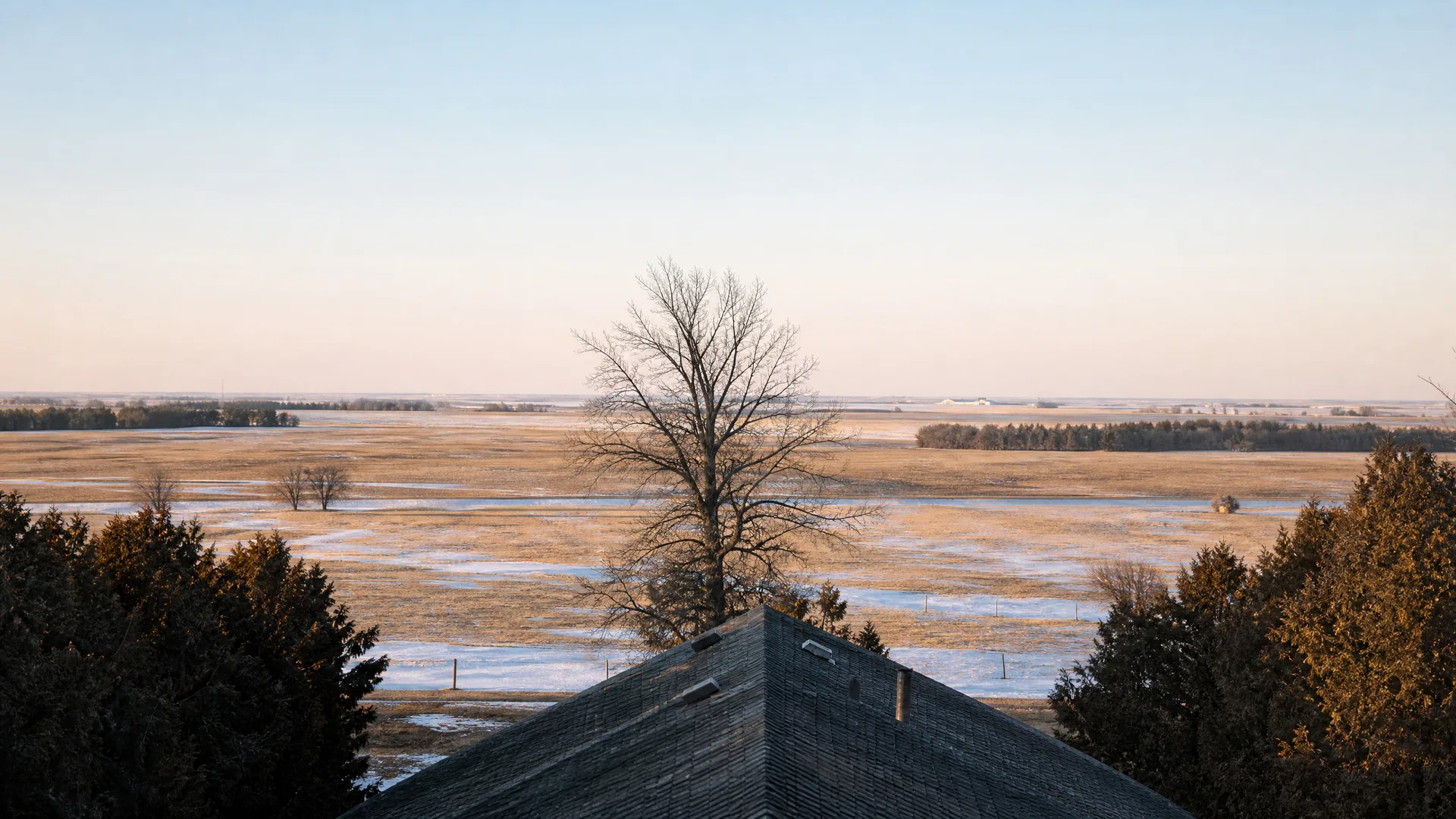
Elevated view over a flat field with patches of snow, a bare deciduous tree at center, evergreen trees at both sides, and the shingled ridge of a roof in the foreground under a pale sky.

Hand off the search today

Start one form

Asking costs nothing, and the choice to hire stays yours.

A heat pump that keeps grinding through defrost all winter is working harder than it should, and that shows up on your power bill before it shows up as a breakdown. Send the request now and skip the part where you call around and explain the noise to three different contractors.