What defrost mode means on a South Dakota heat pump

Step 1 of 3: Equipment

Defrost mode is your heat pump melting the ice off its outdoor unit. In a South Dakota winter, the outdoor coil picks up frost the same way a cold windshield does, and once that frost builds up, air can't move through the coil and the system can't pull heat from outside. So the heat pump reverses itself for a few minutes, sends warm refrigerant outside to melt the ice, and runs the outdoor fan less or not at all while it does. Inside, you'll likely feel cool air for that short stretch, sometimes with the outdoor unit steaming. That's normal and it should end on its own, the system switching back to heating and the fan outside kicking back on. What's not normal is defrosting over and over, running long, or the outdoor unit staying iced up afterward. That points to a problem with the defrost control, a sensor, or the reversing valve, not something that clears up by waiting.

A gray outdoor condenser unit on a concrete pad beside a house with stacked stone and horizontal siding, surrounded by gray gravel and a plain light wall.

How the system knows to defrost

The outdoor unit has a sensor on the coil and a timer in the control board. When the coil temperature drops low enough and enough run time has passed, the board reverses the system briefly and runs the outdoor fan less or not at all. You might see steam coming off the outdoor unit during this. That's normal. It's getting rid of ice, not making more.

A dark gray outdoor heat pump unit sits on a concrete pad beside a white stucco wall and lap-sided house corner, with mulch and a small shrub in the foreground.

Why it runs more in January

A heat pump in South Dakota sees more frost in January than in November because the air holds more moisture relative to how cold it is, and the coil sits below freezing for longer stretches. More frost means more defrost cycles. If you notice the outdoor unit cycling into defrost every hour or less through the coldest weeks, that's worth having a contractor look at before it turns into a unit that can't keep up.

Normal Defrost or a Problem

Normal defrost

  • The outdoor fan slows or stops and you may see steam rising off the unit as the frost melts.
  • It runs for a few minutes at a time, then the system switches back to heating.
  • Indoors you might notice the air from the vents feel cool for a short stretch, then warm back up.
  • This can happen several times during a cold snap and is the system working as designed.
  • You don't need to clear snow or ice off the coil yourself when this is happening.

Needs a repair call

  • The outdoor unit is caked in ice that doesn't clear after a defrost cycle finishes.
  • The system stays in defrost mode for a long stretch instead of switching back to heating.
  • You hear the outdoor fan running while the coil is still iced over, which means it isn't cycling right.
  • The indoor air stays cold well past when a normal defrost cycle would have ended.
  • The unit is cycling into defrost far more often than it used to during similar cold.
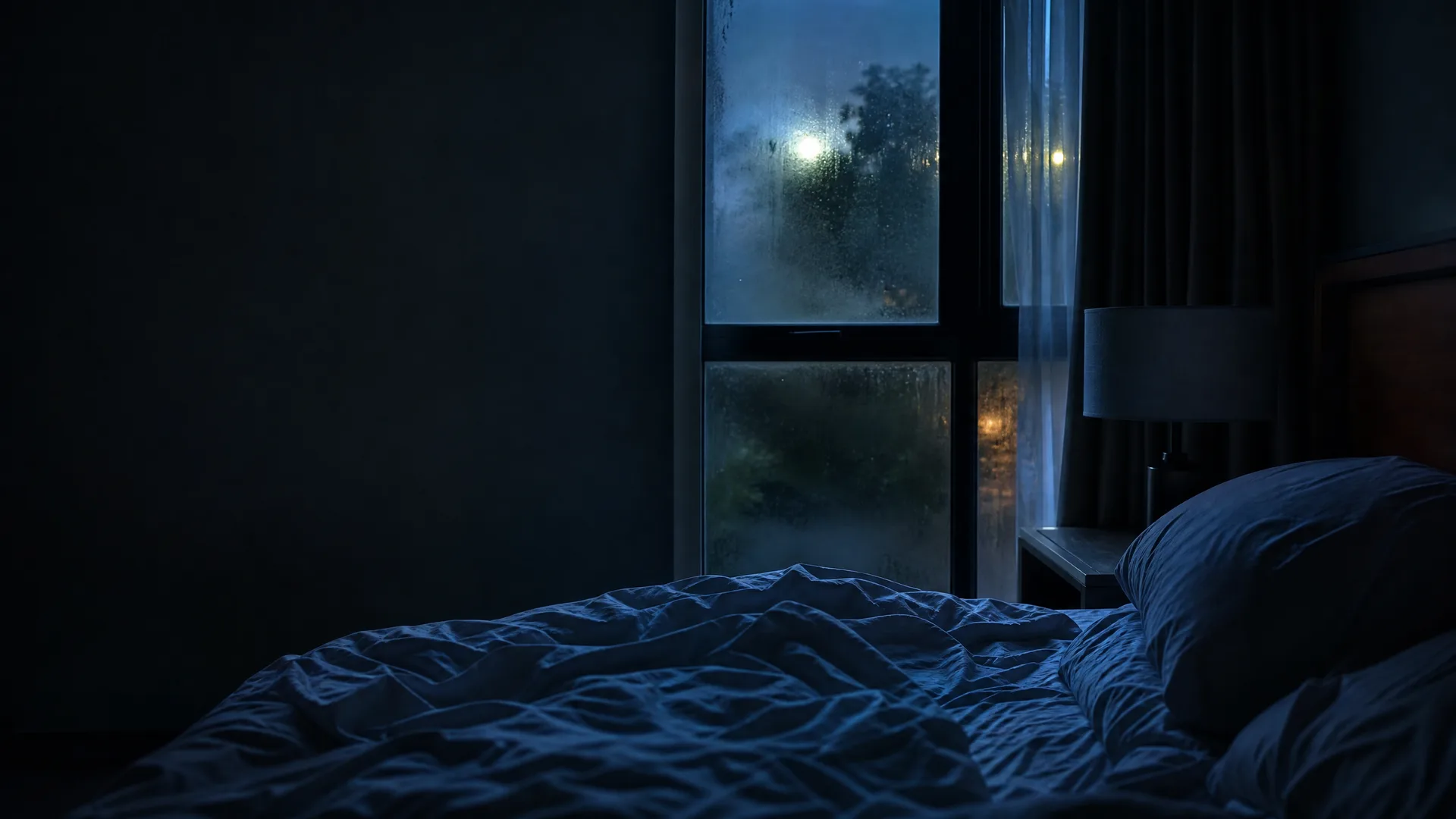
A dark bedroom at night with a rumpled duvet and pillows on a bed beside a rain-streaked, condensation-covered window with distant lights, a curtain, and a bedside lamp.

Midnight, January, and the wind outside is doing that steady push against the siding that it does most of the winter here. You're in the living room because your kid's room is the farthest from the thermostat and she came out complaining her floor was cold. Through the window you can see the outdoor unit, and the fan isn't moving. No steam, no frost, nothing. It's just sitting there dark and still while the house keeps losing ground, two degrees down from where you set it. You've had it do the normal thing before, the brief pause, the puff of steam, back to work in a few minutes. This isn't that. You've already got a space heater running in her room and you're standing at the window with your phone, trying to decide if this is a problem you can wait out until morning or one that gets worse the longer that fan stays off.

Skip the search

The pro who reaches out is licensed in South Dakota.

No fee to send it, and nothing to sign.

A gray outdoor condenser unit on a concrete pad beside a house with horizontal lap siding, with a wall-mounted disconnect box, conduit and insulated refrigerant lines, a shrub at left and gravel at right.

Defrosting on schedule

This is a heat pump doing what it's built to do. The coil frosts up, the board calls for defrost, the ice melts, and the system goes back to heating. You might not even notice, other than a few minutes of cooler air from the vents. No calls, no repeat visits, nothing to track down.

An outdoor condenser unit on a concrete pad beside a horizontal-sided house, with insulated refrigerant lines running to a wall-mounted box, surrounded by bare dirt.

Stuck in the cycle

This unit won't come out of defrost, or it goes back into it every half hour. The outdoor fan stays off too long, ice builds up instead of melting, and the house loses ground on a cold night. A contractor who works on these units all winter in South Dakota can usually tell you what failed just from how it's cycling.

A woman with long light-brown hair in a gray knit sweater sits in a living room looking off to the side, with a sectional sofa, houseplant, lamp, wooden table and large windows behind her.
A woman in a chunky gray turtleneck sweater sits indoors looking off to the side, with a blurred dining table, chairs, pendant lamp and window behind her.
A woman in a cream knit sweater with her hair in a bun stands near a window, looking off to the side, with a gray sofa, houseplant and open kitchen with pendant lights blurred behind her.
A woman with long brown hair in a cream knit sweater stands near a window, looking to the side, with a white sofa, shelving, and a hallway visible behind her.

Leave it alone and watch

If the outdoor unit is doing short defrost cycles and going back to heating, the system is working the way it's supposed to. You can check on it every so often. Steam coming off the coil, the fan slowing down, a few minutes of cooler air inside, that's the cycle finishing on its own. No reason to call anyone for that. Writing down when you notice it helps if things change later, but it isn't a problem to chase. South Dakota winters put the coil through this often, and a heat pump built for cold climates is meant to handle it without help.

Call before it gets worse

If the outdoor unit is coated in ice that isn't melting, or defrost keeps running without heat coming back on, that's not resolving itself. A frozen coil blocks airflow, and the system can end up running on backup heat strip or not warming the house at all while it tries. A local contractor who works on heat pumps through the winter here can look at the sensor, the board and the reversing valve and find which one's stuck. Waiting it out usually means a colder house and a harder repair later, not a system that fixes itself.

A woman with dark hair in a bun sits wrapped in a chunky knit blanket on a couch with a child resting his head on her shoulder, eyes closed, beside a lit lamp and bookshelf indoors.
A smiling older woman with gray shoulder-length hair in a cream cable-knit turtleneck sweater stands behind a wooden board holding a round loaf of bread, in a warmly lit kitchen with a dark window and shelves behind her.
A gray outdoor condenser unit sits on a concrete pad against a house wall with horizontal siding above a stone veneer base, with an electrical disconnect box and conduit on the wall and a leafy shrub in mulch to the left.

The unit holding its own

This is what a heat pump looks like between defrost cycles. The coil is clear, the fan runs steady, and the unit cycles through its normal pattern without any outside sign of trouble. A unit like this is keeping up with a South Dakota winter on its own.

An outdoor air conditioner condenser unit on a concrete pad beside a house with horizontal siding above a concrete block foundation, with insulated refrigerant lines and a vertical white pipe on the wall.

A unit that can't keep up

Weathering like this often comes with age, and an older unit may not defrost the way it used to. If the coil near those refrigerant lines stays frosted instead of clearing, or ice builds up on the lines themselves, the defrost cycle isn't finishing the job.

Power costs 13.32 cents per kilowatt-hour statewide

At 13.32 cents a kilowatt-hour, a heat pump stuck running extra defrost cycles or the backup heat strips too often adds up fast on your bill. That's worth a look before you just live with it.

EIA-861 2025 statewide residential average

What Defrost Mode Tells You

  • Defrost mode means your heat pump is clearing frost off the outdoor coil so it can keep pulling heat from the air.
  • A normal cycle runs a few minutes, the fan slows or stops, then the system switches back to heating on its own.
  • Stuck defrost, ice that doesn't clear, or the backup heat strips kicking on too often is when a tech needs to look at it.
  • A South Dakota contractor who services heat pumps all winter knows which board sensors and reversing valves tend to fail first on units like yours.
  • You get matched with one licensed local contractor instead of fielding calls from several companies trying to win the job.
  • Once you know what your unit is doing and why, the decision to leave it alone or get it checked is yours to make.

Defrost mode is nothing more than your heat pump clearing ice off the outdoor coil so it can keep doing its job. A few minutes of cooler air from the vents, the fan slowing down, steam coming off the unit: that's the system working the way it was built to, and it switches back to heating on its own. What's worth a second look is different. Ice that doesn't melt between cycles, a unit that stays in defrost longer than it should, or backup heat strips kicking on more than they used to all point to something in the control board or the reversing valve not doing its part. You don't need to diagnose which part it is. You need someone who already knows, because they've seen it fail on units like yours before, in winters like this one. A contractor who services heat pumps through a South Dakota winter has a good sense of which sensors and valves give out first, and in what order to check them, before guessing and replacing parts that were fine. When you put in a request through this page, it goes to one licensed local contractor, not a handful of companies competing for the job and calling you back one after another. You've already got the bigger picture: what defrost mode is, what it looks like when it's working, and what it looks like when it isn't. Whether you watch it a while longer or have someone look at it now is up to you.

Sunlit corner of a room with a wooden sideboard holding a ceramic vase of olive branches and a dark wooden bowl, beside a white-framed window, a hardwood floor and woven rug.
A wooden cabinet holding a pale ceramic vase with leafy branches stands beside a beige wall in a sunlit room with hardwood floors, a jute rug, and a window showing green foliage outside.
Sunlit room corner with a beige upholstered sofa holding a rust-brown cushion, beside floor-length linen curtains at a window, over a wood floor with a woven rug.
Corner of a room with beige walls, a framed photograph, a floor-length linen curtain beside a window, an upholstered armchair with a knit pillow, white baseboards and trim, wood flooring and a pale rug.
Sunlit living room corner with a beige upholstered armchair with a cushion, linen curtains beside a wooden-framed window, green vertical panelled wall with a framed print, and a wooden table edge over a woven rug.

Explain it one time

Only one pro gets your request, so you hear from one company.

Fill out one form

Sending the form costs nothing.