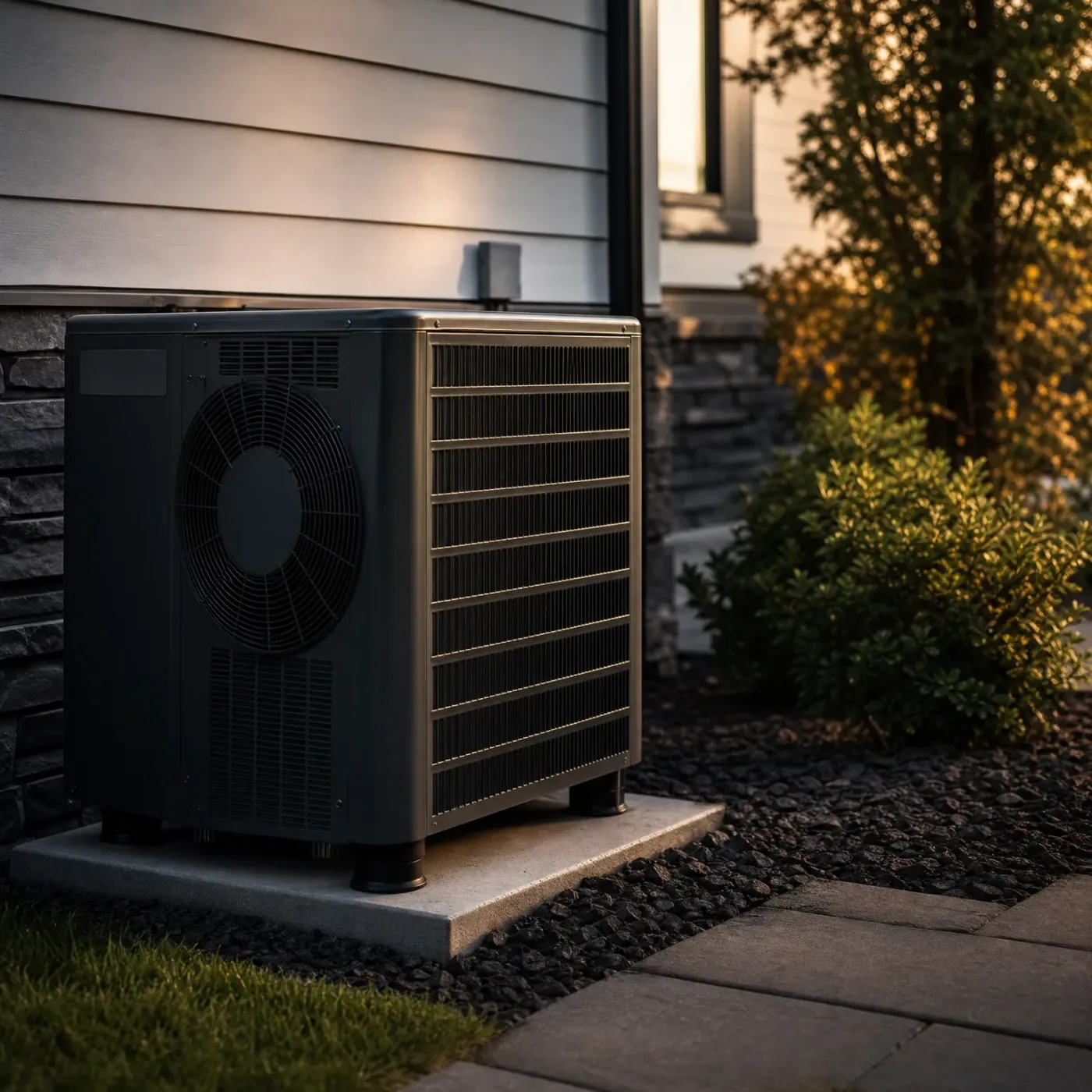
A dark outdoor heat pump unit with a round fan grille and finned coil sits on a concrete pad beside a house with horizontal siding and stone veneer, next to gravel, a paver walkway, grass and shrubs in warm low light.

It's off your list after this

What auxiliary heat means on a South Dakota heat pump

Auxiliary heat is the backup strip heat that kicks in when your heat pump alone can't keep up, and seeing it run a lot in a South Dakota winter has most homeowners wondering if something's wrong with the unit. Below is what that light means and when it's worth having a contractor look at the system instead of your electric bill. If you'd rather skip the search and get someone out to check it, send the form and stop chasing quotes yourself.

Send it today

Auxiliary heat is the backup heating element inside your air handler, usually electric strips, that turns on when the heat pump outside can't pull enough heat from the cold air by itself. Below about 35 to 40 degrees, a heat pump starts losing its ability to keep a house warm on its own, and South Dakota winters sit well under that for months at a stretch. So the system leans on the strips to make up the difference, especially during cold snaps or when the thermostat is asked to climb several degrees fast, like after you bump it up in the morning. Seeing the aux light on during a hard freeze is normal. What's worth paying attention to is if it's running constantly even when it's not that cold out, or if your heat feels weak with it on. That usually points to the heat pump itself not pulling its weight, not the backup heat doing anything wrong.

A gray outdoor condenser unit sits on a concrete pad beside a house with horizontal lap siding, with a wall-mounted disconnect box and refrigerant lines, mulched beds and a shrub nearby, and a concrete walkway in the foreground.

Running as it should

On a mild day the outdoor unit does the job alone, no aux light, no strip heat. Air coming out of the vents feels warm, not hot, because a heat pump moves heat instead of making it. That's normal and it means the system isn't working any harder than it has to.

An outdoor air conditioning condenser unit with dusty coils sits on a concrete pad against light horizontal siding, with an electrical disconnect box and refrigerant lines on the wall and a shrub and mulch at left.

Stuck on aux

If the aux light stays on through a stretch of weather that isn't especially cold, or the outdoor unit looks like this, caked with grime, iced over, or quiet when it should be running, the heat pump isn't pulling its share. A low charge, a failed defrost cycle, or a dying compressor can all push the system into relying on strip heat alone.

Aux Heat: Problem or Just Cold

Call for repair

  • The aux light stays on for hours at a time even when it's not that cold outside, which points to the outdoor unit not pulling its share of the load.
  • Your electric bill jumps hard in a month that wasn't especially cold, since strip heat runs on straight electric resistance and costs more to run than the heat pump itself.
  • Air from the vents never feels more than lukewarm, even with aux running, which can mean the strips themselves aren't heating or the heat pump isn't contributing at all.
  • The outdoor unit is iced over and staying that way, which stops it from pulling heat from the air and pushes the system onto aux to cover the gap.
  • The thermostat calls for aux on its own in mild weather, not just during a hard cold snap, which suggests the heat pump side isn't able to keep up anymore.

Normal for the weather

  • Aux kicks on during a stretch of single digits or below zero, which is close to where a heat pump stops being able to pull enough heat from the outdoor air alone.
  • The light comes on during defrost, a short cycle where the outdoor coil clears itself of frost and aux covers the house for a few minutes.
  • Aux runs right after you bump the thermostat up several degrees at once, since the heat pump alone would take a while to close that gap.
  • It clicks on first thing in the morning after the house cooled overnight, when the system needs a quick push to catch back up.
  • The light goes off again once the temperature outside climbs back above the mid 30s, and the heat pump takes over on its own without you touching anything.
A smiling man with dark curly hair in a dark green henley shirt sits on a light sofa in a living room with large windows, a lamp, shelving, a stone fireplace, and a bowl of popcorn in the foreground.
A smiling man in a dark long-sleeved henley shirt sits on a beige sofa in a living room, with a bowl of popcorn and a remote on the table in the foreground and shelves, a lamp, and a doorway behind him.
A smiling man with graying hair and stubble in a blue henley shirt sits on a gray sofa with cushions in a living room, with a bowl of popcorn on a wooden table in the foreground.
A smiling man in a dark green long-sleeve shirt reclines on a sofa in a dimly lit living room, with a bowl of popcorn on a side table in the foreground and a bookshelf, lamp, and houseplant behind him.

Why does my aux light keep coming on tonight?

You're watching the thermostat and the aux light clicks on again, maybe more than once an hour. The air from the vents feels hotter than usual, almost like a furnace instead of the gentler warmth a heat pump puts out. Your gas bill stays where you'd expect, but if aux heat is the one picking up the slack, it's the electric side carrying extra load you didn't plan for. Most homes here run on gas, so a heat pump leaning hard on its electric strips stands out fast once you're paying attention. If the outdoor unit can't keep up even on nights that aren't that cold, something in the system isn't pulling its weight, and that's worth having a contractor look at before it gets worse.

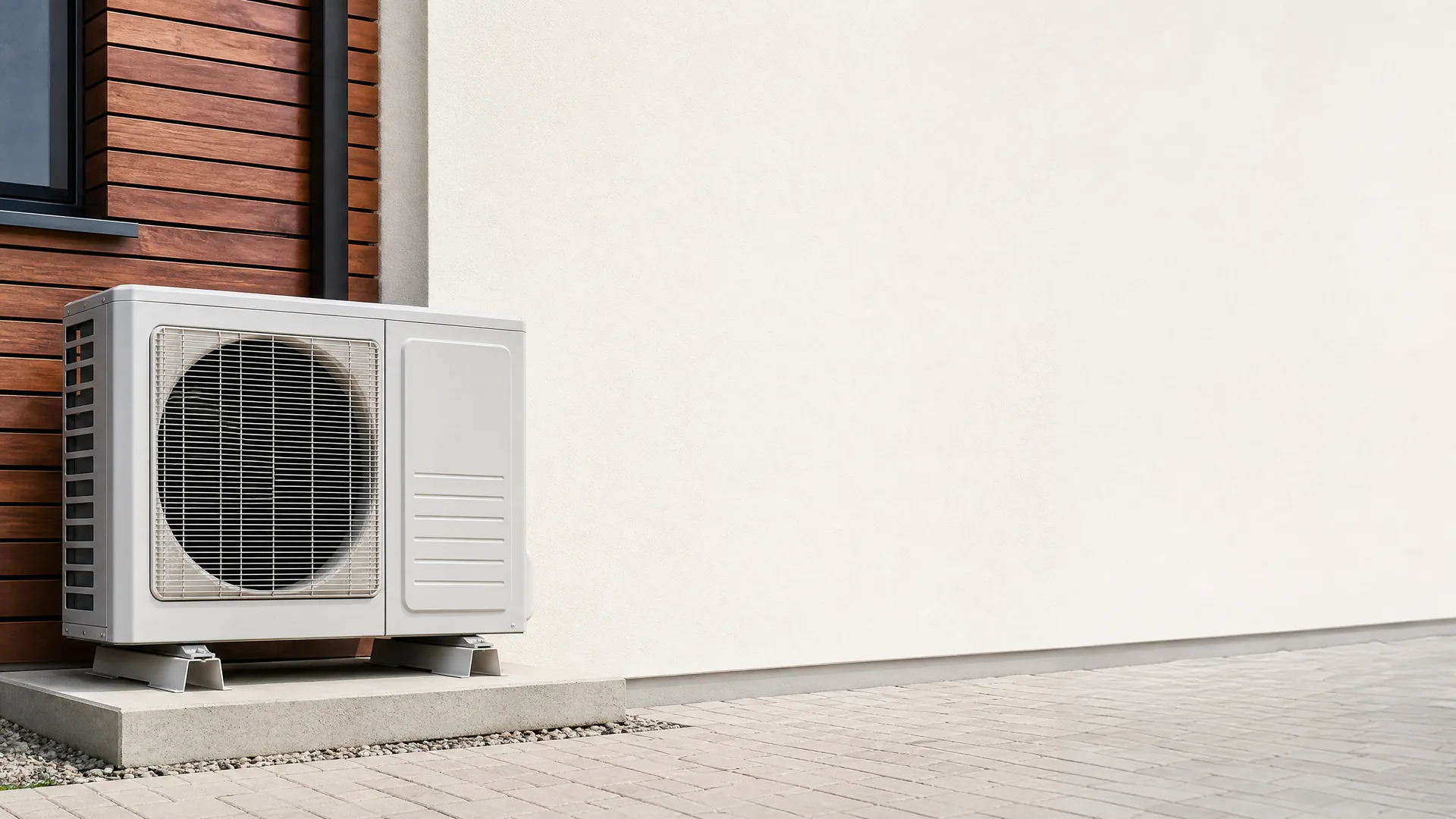
A white outdoor heat pump unit on a concrete pad beside a house with wood-slat siding and a large plain light-colored stucco wall, with paving stones in the foreground.

What the strips actually do

The electric strips sit right in the air handler, downstream of the heat pump coil. When they fire, they heat the air directly instead of moving heat from outside, which is why the vents suddenly feel like a furnace is running. That jump in temperature at the register is the clearest sign aux is on, clearer than the thermostat light sometimes. It's also why aux costs more to run than the heat pump alone, electric resistance heat takes more power to produce the same warmth.

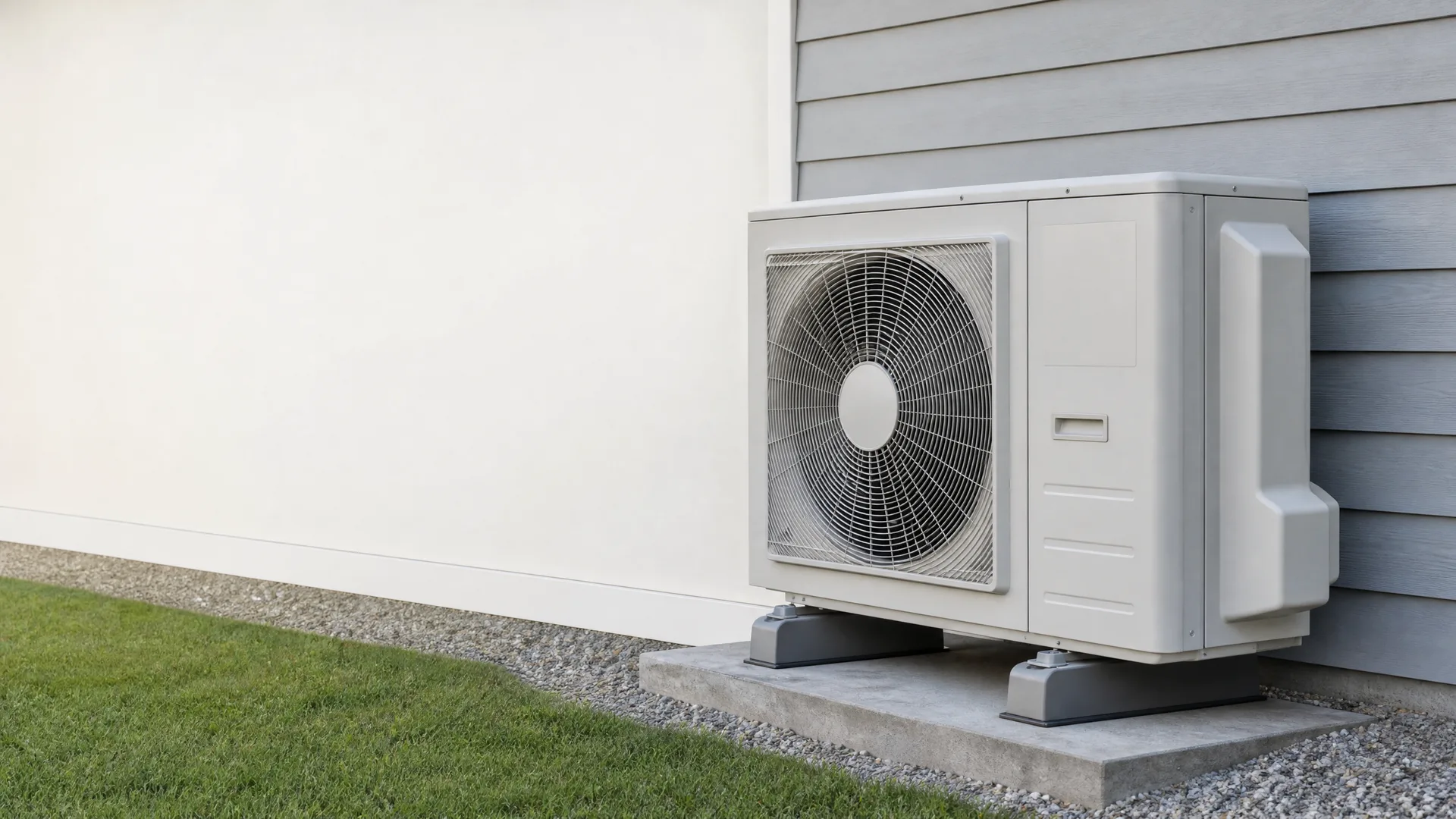
A white outdoor heat pump unit on rubber feet sits on a concrete pad beside a gray-sided house wall, next to a smooth light wall, gravel strip and lawn.

Defrost will trigger it too

On a cold, damp night the outdoor unit can frost over, and the system runs a defrost cycle to clear it. During defrost the outdoor unit can't heat, so aux often kicks on to cover the house while that happens. That's a few minutes, not hours. If you notice the outdoor fan stop and steam coming off the coil right before aux clicks on, that's defrost working the way it should, not a sign the heat pump is falling behind.

A wooden table in the foreground holds a closed laptop and a ceramic mug of coffee, with a spindle-back wooden chair behind it, a beige wall with paneled wainscoting, a window at left, and a kitchen counter with a cutting board, bowl of fruit and greenery at right.

How the switch actually happens

The thermostat is doing the deciding, not the outdoor unit. Most heat pump thermostats have a second stage built in, and when the indoor temperature falls a couple degrees behind the setpoint, that second stage closes and sends power to the strips. The outdoor unit doesn't shut off when this happens. It keeps running and the strips just add to what it's already putting out. Some systems also bring the strips on during defrost, since cold air would otherwise blow through the vents for a few minutes while the outdoor coil clears itself.

If the strips are firing more than that thermostat logic calls for, the cause is usually something upstream: a stuck contactor, a low charge, a bad defrost sensor, or a thermostat that's calling for stage two too soon. None of that is a guess you need to make standing at the thermostat. A contractor who works on heat pumps can read the fault history off the board and tell you in one visit which of those it is, instead of you calling around to find someone who'll even look at a heat pump instead of just a furnace.

A wooden table holding a stone vase with a bare branch, two stacked books and a small dark bowl, beside a window with green foliage outside and a sofa in the dim background.
  1. Thermostat senses the room falling behind the setpoint.

  2. Second stage closes and calls for auxiliary heat.

  3. Air handler energizes the electric strip heat.

  4. Strips heat the air directly as the heat pump keeps running.

An outdoor air conditioning condenser unit on a concrete pad beside a house with horizontal lap siding, with a green shrub to the left and a wide concrete slab in the foreground.
Before you get your heat pump repair
A gray outdoor condenser unit on a concrete pad beside a light-colored horizontal-siding house, with a disconnect box and refrigerant line on the wall, ornamental grasses and a shrub in mulch nearby, and a concrete patio in the foreground.
After you get your heat pump repair

Hand off the search today

You've read through what the aux light means and when it points to trouble. If your heat pump is leaning on strip heat more than it should, or the outdoor unit seems to have quit pulling its weight, the next step is getting someone out to look at the actual equipment, not another explanation. That part of the job usually means stopping what you're doing to search for contractors near you, calling a few, describing the aux light and the electric bill to each one, then sitting with quotes trying to guess who's right. In South Dakota, with gas heat covering most homes and power priced the way it is, a heat pump running hard on strips all winter is worth sorting out before the next cold stretch. Send the request above and that legwork is off your plate. You stop chasing contractors and start waiting on one who already has what you told him.

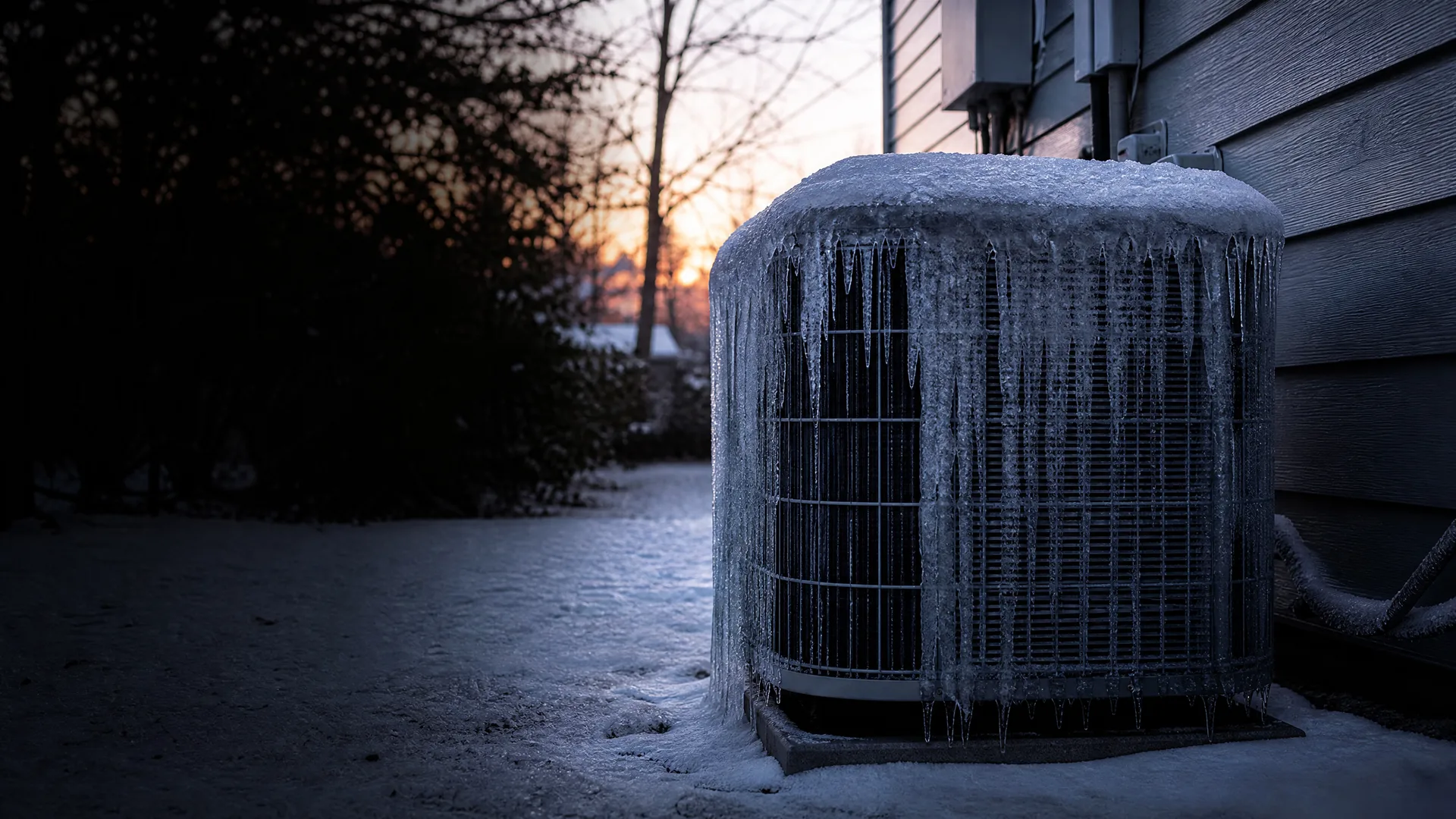
An outdoor condenser unit beside a horizontally sided house, encased in thick ice with hanging icicles, on snow-covered ground at dusk with bare trees and a sunset behind.

Six in the morning, still dark, and you go out for the mail before work. The side yard is quiet, that hard South Dakota quiet that only shows up in January. The outdoor unit is sitting there coated in ice, thick on the coil, climbing partway up the sides like something left out too long. The fan isn't moving. You can hear the furnace fan going strong inside, warm air pushing through the house, but out here nothing is pulling heat from anywhere. You stand there a second with your breath showing, looking at it, before you head back in to check the thermostat.

Power costs 13.32 cents per kilowatt-hour statewide

Strip heat runs on electricity, and at 13.32 cents a kilowatt-hour that's not the cheap part of your bill. A heat pump sipping power to move heat is one thing. Strips making it from scratch for hours cost a lot more, which is why a bill that jumps without a cold snap to explain it is worth a second look.

EIA-861 2025 statewide residential average

A gray outdoor condenser unit on a concrete pad beside a light green lap-sided house, with a wall-mounted electrical disconnect box, mulch bed with shrubs, river rock, and a paved walkway in the foreground.
Clean coil, free of dirt, with the fins open to the air so the heat pump can pull what little heat is out there and leave the strips alone.
An outdoor air conditioner condenser unit on a concrete pad beside a house with beige vinyl siding, with a gray electrical disconnect box and insulated refrigerant lines on the wall and river rock to the right.
Coil packed with dirt and debris, fins blocked, so the heat pump can't gather enough heat and the strips end up carrying the load instead.
A single-story house with light gray horizontal siding, dark gray shingled gables, black shutters and a dark front door, fronted by a mulched bed of small shrubs and a large lawn under a clear blue sky.

Summer air in South Dakota runs a dew point of 56°F, averaged over June, July and August, according to NOAA climate data. That's on the comfortable side, not the thick, sticky air you'd get further south. For your heat pump, that matters more in winter than summer, since the same system that cools your house with room to spare is the one pulling heat out of cold outdoor air come January. A unit built for a place with mild, dry summers isn't being asked to fight heavy humidity most of the year, but it still has to work hard against the cold, and that's where the aux heat question actually lives.

NASA POWER T2MDEW county cells weighted by homes

A woman in a dark gray sweater reclines on a couch with her eyes closed and a knit blanket over her lap, an open book resting face-down in front of her, with a lit table lamp and shelving blurred in the background.
A bearded man in a dark navy sweater over a collared shirt smiles and looks off to the side while seated at a dinner table with a glass of red wine, a lit candle, and a plate of food in the foreground of a dimly lit room.

What the aux light tells you

  • Auxiliary heat is the electric strip heat that steps in when the outdoor unit can't pull enough warmth from cold air on its own.
  • Seeing it come on during a hard South Dakota cold snap is normal and does not mean the heat pump is failing.
  • Aux running for hours when it isn't especially cold, or a heat bill that spikes without a cold stretch to explain it, points to the outdoor unit falling short.
  • Ice buildup, a dirty outdoor coil, or a thermostat stuck calling for second stage are the kinds of problems that push a heat pump into leaning on strips too much.
  • Getting the right call made is one less thing to carry: no searching for a contractor, no calling around, no repeating what the aux light's been doing to three different people before someone can look at the outdoor unit.

The aux light is information, not an alarm. It tells you the outdoor unit has handed part of the job to the electric strips because the air outside is too cold for the heat pump to pull enough warmth from it alone. On a hard South Dakota night, that's the system working as designed. What it shouldn't be doing is running for hours on a day that isn't particularly cold, or showing up as a jump in your electric bill with no cold stretch to explain it. That pattern means the outdoor unit isn't carrying its share, and something is making it fall short: ice on the coil, dirt packed into the fins, or a thermostat that's stuck calling for second stage long after it should have backed off. None of those are things you can see from inside the house watching the vents. They need someone standing at the outdoor unit with it running, checking the coil, the defrost cycle, and the thermostat's staging against what the system is actually doing.

Once you know what the light means, the only real decision left is whether what you're seeing matches normal operation or points to a problem. If it's the latter, the part that's actually hard isn't understanding the aux light anymore, it's finding someone who can get out to your outdoor unit, look at the coil and the defrost cycle, and tell you straight whether the strips are covering for a unit that needs work. That's the piece worth handing off rather than carrying yourself.

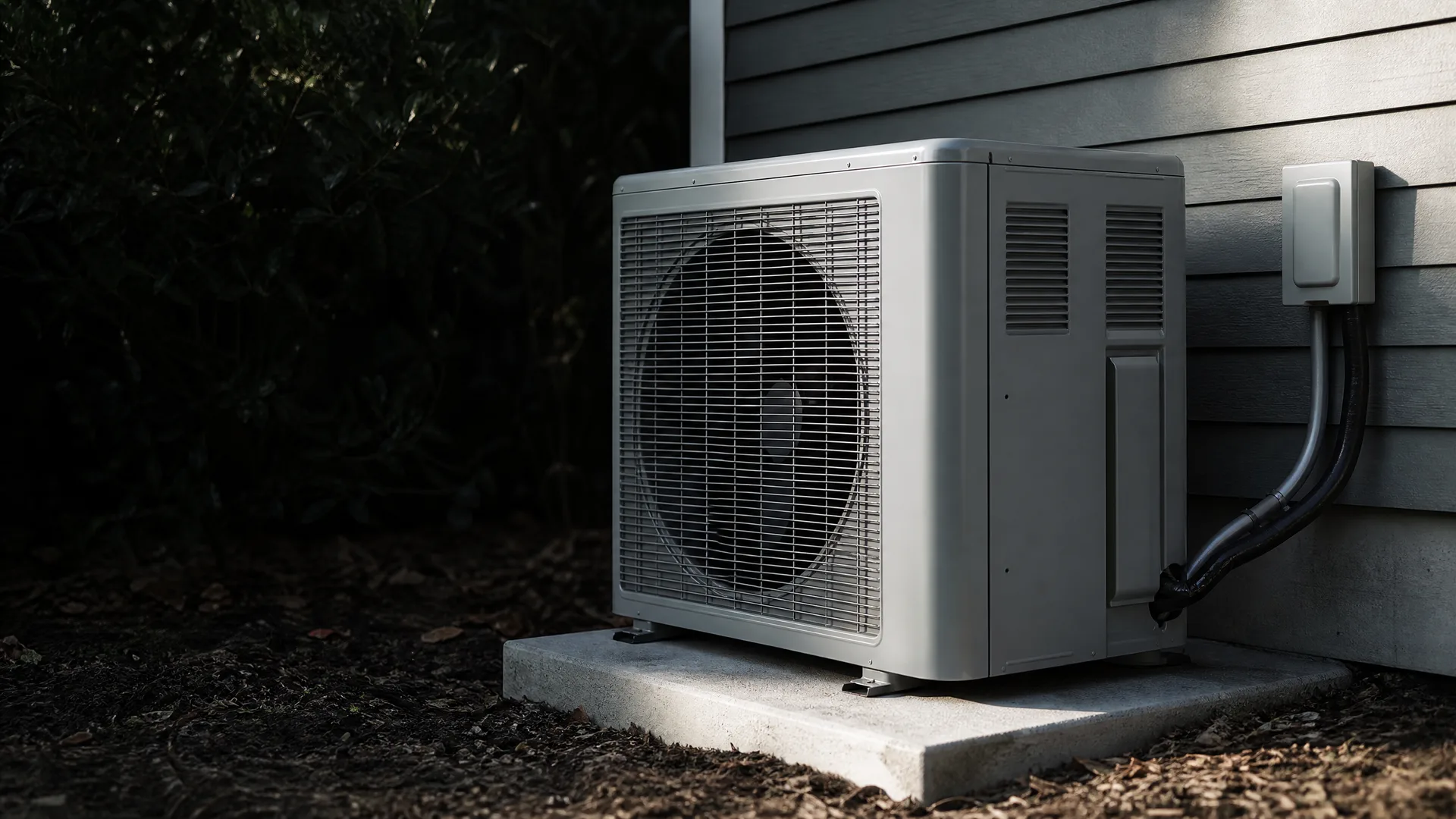
An outdoor air conditioning or heat pump condenser unit on a concrete pad beside a gray horizontal-sided house, with a disconnect box and conduit on the wall and dark shrubbery to the left.

Stop chasing a heat pump pro

Step 1 of 3: Equipment