









Profile view of a bearded man wearing a dark baseball cap and a dark gray T-shirt against a plain off-white background.

Is a cold-climate heat pump worth it in South Dakota

Step 1 of 3: Equipment

A cold-climate heat pump works in South Dakota, but most homes here heat with gas, and that changes the math. These units are built to keep pulling heat from outside air even when it drops well below zero, so they don't struggle the way older heat pumps did on the coldest nights. The problem isn't whether it can heat your house. It's that gas furnaces here are already cheap to run, and power prices are low too, so a heat pump isn't closing a wide cost gap the way it would somewhere that heats with oil or propane. Summers are a lighter case for it: the air is warm but not heavy, so the cooling side doesn't have to work as hard as it would in a humid state. If your furnace is getting old and you're weighing a replacement anyway, a cold-climate heat pump is worth a real look. If your furnace is fine, there's less pushing you toward one.

A smiling bearded man in a dark green hooded jacket and blue t-shirt sits on a couch in a living room with shelves, a potted plant, and a bowl of popcorn on a wooden table.
A smiling man in a green long-sleeved shirt sits on a beige sofa in a living room, with a bowl of popcorn in the foreground, a large potted plant and shelving behind him.
A smiling man in a dark blue T-shirt sits on a couch in a dimly lit living room with a bowl of popcorn and a remote on a wooden table, a lit floor lamp and bookshelves behind him, and windows showing greenery.
A smiling bearded man in a dark green long-sleeved shirt sits on a leather couch in a living room, with a bowl of popcorn and a remote control on a wooden table in the foreground.

A cold-climate heat pump doesn't run flat out or shut off the way older units did. The compressor is variable-speed, so it ramps up as the air outside gets colder and backs off when it doesn't need to work as hard. Once the temperature drops to somewhere around 0 to 5 degrees, a dual-fuel setup hands the job to your gas furnace, and a control board makes that call automatically based on outdoor temperature and whatever electricity and gas rates you've set it to compare. You'll see the outdoor unit run in reverse for a few minutes now and then in winter. That's the defrost cycle clearing ice off the coil, not a malfunction. Come summer, the same equipment flips back to pulling heat out of the house like any standard air conditioner. Given that most homes here lean on gas for the bulk of winter, the heat pump ends up doing its heaviest lifting during the shoulder months, spring and fall, when it can cover the load on its own without the furnace needing to kick in at all.

How the switchover actually works

  • A cold-climate heat pump uses a variable-speed compressor that ramps up output as the temperature outside drops, instead of just switching on and off.
  • Below a set outdoor temperature, usually somewhere around 0 to 5 degrees, a gas furnace takes over as the backup heat source in a dual-fuel setup.
  • The system's control board decides which source to run based on outdoor temperature and the cost you set for electricity versus gas, not just comfort.
  • Defrost cycles briefly reverse the system to melt ice off the outdoor coil, which is normal and not a sign of a problem.
  • In summer the same unit runs in reverse as a standard air conditioner, pulling heat out of the house instead of bringing it in.
  • Because gas is the primary heat source in most homes here, the heat pump mainly takes over the milder stretches of fall and spring.
A gray outdoor heat pump unit on a concrete pad beside a house with horizontal lap siding, connected by conduit and a flexible line to a wall-mounted disconnect box, with low shrubs and mulch nearby.
A heat pump sized right for your house keeps up with a South Dakota winter on its own, with the furnace kicking in only on the coldest nights.
An outdoor air conditioner condenser unit on a concrete pad beside a house with beige horizontal siding, with conduit running from an electrical box on the wall.
A heat pump that's undersized or paired with a furnace that isn't talking to it right will lean on expensive backup heat more than it should.

What This Means for Your House

  • If gas is cheap where you live, a heat pump that leans on backup heat too often can cost more to run than your old furnace alone.
  • A thermostat set wrong, one that calls for backup heat before the heat pump has a chance to work, will quietly drive your gas use up all winter.
  • You'll notice the heat pump running longer and at lower fan speeds than a furnace does, which is normal, not a sign something's wrong.
  • If the unit is sized for your house, your gas furnace may only fire on the handful of nights each year that drop well below zero.
  • An oversized or mismatched system can short cycle, which wears on the compressor faster than steady, longer runs would.
  • Your summer bill should drop some, since South Dakota air is dry enough that the heat pump isn't fighting humidity the way it would in a muggier state.

Since most homes in South Dakota heat with gas, the question isn't whether a cold-climate heat pump can handle the winter. It's whether running it saves you anything over the furnace you already had. With power cheap here, the answer depends almost entirely on how the system is set up. A heat pump and furnace that are talking to each other correctly will split the work so the furnace only covers the deep cold, the nights that drop well below zero. That's when the arrangement pays off. But the thermostat has to be set to let the heat pump do its job first. If it's calling for backup heat too early, you're paying for gas you didn't need to burn, and you'd never know it just from looking at the thermostat. Pay attention to how the system runs, not just what the bill says. A heat pump running long and slow on a cold afternoon is doing exactly what it's supposed to. A unit that's cycling on and off every few minutes is not, and that kind of short cycling adds wear to the compressor over time. Sizing matters more here than people expect. The right size means a quiet system and a furnace that rarely fires. The wrong size means more backup heat than you planned on, and a bill that doesn't look much different from before. Summer is the easier win, since South Dakota's dry air means the heat pump isn't working against humidity on top of temperature.

A woman in a dark gray sweater reclines on a light sofa with eyes closed and a slight smile, under a textured gray blanket with an open book resting on her lap, with a lit table lamp and plant in the background.
A smiling bearded man in a navy crewneck sweater sits at a dinner table with a glass of red wine, plates and glasses in the foreground, in a dimly lit room with a lamp and framed picture behind him.

A heat pump pro near you

Send the form and stop researching installers for the new heat pump.

There's no charge for the request.

Why gas stays in the picture

Gas is still cheap in South Dakota, and most homes here already have a furnace and the gas line to run it. Pairing it with a cold-climate heat pump means the furnace only has to cover the deep cold, not the whole winter. You're not ripping out a working system, just adding one that handles the other nine or ten months. The furnace sits there as backup, burning gas on the handful of nights the heat pump can't keep up on its own.

What summer asks of it

South Dakota summers are warm but the air isn't heavy, so a heat pump here isn't working against the humidity it would in a wetter state. It still has to cool the house on the hottest days, and that side of the job looks like any other central air system. The difference shows up in winter, where a regular heat pump would stall out. A cold-climate model keeps pulling heat from outside air long after a standard unit would have given up and left everything to the furnace.

Power costs 13.32 cents per kilowatt-hour statewide

At 13.32 cents a kilowatt-hour, your heat pump costs less to run here than in most of the country. That's the piece that makes it worth pairing with your furnace instead of just leaning on gas alone. The furnace still earns its keep on the coldest nights, but the heat pump is doing cheap work the rest of the time.

EIA-861 2025 statewide residential average

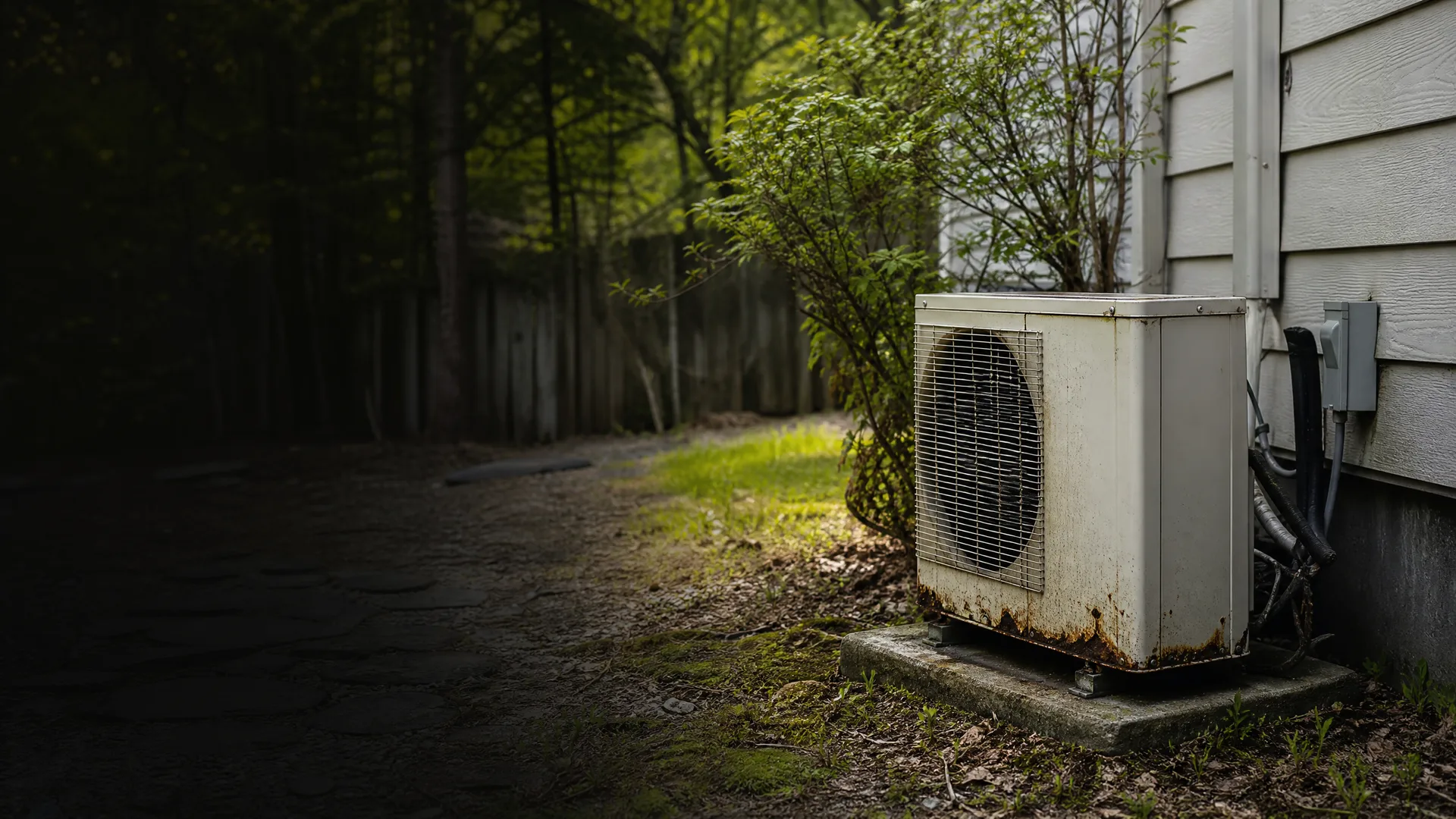
A weathered, rust-streaked outdoor heat pump unit on a concrete pad beside a house with horizontal siding, with shrubs, moss and a dim wooded yard and fence to the left.

You walk out to the side yard on one of the first warm days of April, the snow finally gone, and the outdoor unit is sitting there in the thaw. The cover's been off it all winter. You crouch down to look and see rust creeping along the base, the metal gone orange and flaking where the snowmelt sat against it all season. It still ran fine through the cold, kept the house warm on its own most nights with the furnace barely kicking on. But the rust wasn't there last spring. You run a finger along the edge, feel how soft the metal's gotten, and figure it's worth having someone look at before next winter asks more of it.

Is your heat pump actually carrying its share this winter

Walk out and check the outdoor unit when it's running on a cold night. If it sounds like it's working hard but the air coming out of your vents feels barely warm, the furnace may be covering more of the load than it should. Check your thermostat settings too. If it's set to bring in backup heat at a mild outdoor temperature, the furnace is picking up work the heat pump could still handle on its own, and your gas bill carries that difference. A heat pump that cycles on and off fast instead of running steady is also worth noting. None of this damages the system right away, but it means you're paying for heat twice when you only need it from one source.

A two-story house with cream horizontal siding, a dark gabled roof, and a white front door, fronted by a lawn, shrubs, and a concrete walkway leading to a sidewalk and street, with large leafy trees on both sides.

Summer air here sits at a dew point of 56°F, which is why it never feels heavy even on a warm afternoon. That matters for your heat pump on the cooling side. Dry air gives up heat easily, so the unit doesn't have to run as hard or as long to pull humidity and warmth out of the house. You'll notice shorter run times and a system that cycles off instead of grinding through the afternoon. It's a break your furnace doesn't get in January, but your heat pump gets it most of the summer. (Source: NOAA climate normals for South Dakota)

NASA POWER T2MDEW county cells weighted by homes

Which system should lead this winter

Heat pump as lead

  • Your electric rate of 13.32 cents a kilowatt-hour makes the heat pump the cheaper option to run on most days above freezing.
  • A right-sized unit covers the bulk of the winter on its own, with the furnace only stepping in on the coldest nights.
  • Setting the thermostat so backup heat doesn't kick in too early keeps the gas furnace from quietly taking over hours it shouldn't.
  • On the cooling side, the dry air here means the heat pump doesn't have to run as long to pull the humidity down.
  • Rust or a dead outdoor unit after a winter of neglect means the furnace has been carrying the whole load without you knowing it.

Furnace as lead

  • With gas still cheap in South Dakota, letting the furnace cover more of the winter can cost less than pushing the heat pump through the deep cold.
  • Most homes here already have the furnace and the gas line installed, so there's no new fuel source to add.
  • A furnace that isn't talking to the heat pump right will lean on backup heat too often, driving up the gas bill without you noticing.
  • On the coldest nights, below roughly 0 to 5 degrees, the furnace takes over anyway, so it's doing the job it was built for.
  • Leaving the heat pump as backup to the furnace means less wear on the outdoor unit over a long South Dakota winter.
An outdoor air conditioner condenser unit on a concrete pad beside a house with horizontal vinyl siding, with refrigerant lines and an electrical disconnect box on the wall and dry leaves on the ground.
Before you get your heat pump installation
A gray outdoor heat pump unit on a concrete pad beside a house with horizontal lap siding, with a conduit running to a wall-mounted disconnect box and a green shrub to the left.
After you get your heat pump installation

Heat pump alone

On a mild day it cools or heats your house for 13.32 cents a kilowatt-hour and never touches the furnace. Once it's cold enough outside, it starts losing ground and your rooms take longer to catch up.

Hand off my installation

Heat pump plus furnace

The heat pump covers most of the winter and the furnace only fires on the coldest nights. Gas is cheap here, so letting the furnace take the deep cold keeps the bill from creeping up.

Hand off my installation
A woman stands in the open doorway of a white stucco house holding the dark door, facing a man in a black cap and shirt seen from behind in the blurred foreground, with a potted flowering plant beside the entry.

A cold-climate heat pump earns its place next to your furnace

A cold-climate heat pump is worth it in South Dakota when it's sized right and set up to work with your furnace instead of against it. Cheap power makes the heat pump the better choice most days. Cheap gas means the furnace still has a job on the coldest nights. Get that pairing right and you're running each one where it costs you least.

Where you stand now depends on things you can check yourself: how the thermostat is set, what the outdoor unit looks like under its cover, whether the furnace is picking up more than it should. If you're not sure, a contractor who works on these systems in South Dakota can look at what you have and tell you whether it's set up the way it should be, or what to change so it is.

A dark ceramic mug on a round wooden table beside a light grey sofa with a woven cushion and knit throw, with a window, potted plant, floor lamp and wooden cabinet blurred in the background.
A lit ceramic table lamp with a linen shade sits on a round wooden side table with a small vase of greenery and a dark shallow bowl, beside a beige upholstered sofa with a cushion and knit throw, below a framed artwork on a pale wall.
Corner of a beige linen sofa with a large woven cushion and a fringed knit throw, beside a potted leafy tree in a woven basket against a neutral wall.
Sunlit interior corner with a wood-framed armchair with beige cushions and a striped pillow, a leafy plant in a tall ceramic pot, a window with wood sill showing green foliage outside, and dark wood flooring.
A lit black path light beside a stone walkway leading to a dark front door of a white clapboard house, with shrubs and flowering plants in the bed at dusk.
A covered porch at dusk with a wooden front door, a lit lantern wall sconce on gray horizontal siding, a black rocking chair with a cream throw, a potted white flowering plant, a coir doormat, and a window showing a lit interior lamp.

Get the right pro for your heat pump

Once you send the form, finding a pro is off your list.

Find a heat pump pro

Asking costs nothing, and the choice to hire stays yours.








