




South Dakota Heat Pumps

How long a heat pump lasts in Rapid City, SD

Step 1 of 3: Equipment

A heat pump in Rapid City typically lasts 10 to 15 years. The deciding factor here is winter. Once temperatures drop into the teens and below, a heat pump has to work harder to pull heat from outside air, and most systems here lean on backup heat strips to get through the coldest stretches of the year. That extra strain adds up faster than it would in a milder climate, and it tends to show up first in the compressor and the outdoor coil. Regular service stretches the life of the system, but most homeowners in Pennington County see their heat pump need replacement somewhere in that 10 to 15 year window rather than beyond it. If yours is already past 12 years and starting to run longer cycles or struggle on the coldest days, it is worth having someone look at whether repair still makes sense or whether replacement is the better move.

What does winter in Pennington County ask of a heat pump?

  • Winter nights average 13°F

    Nights average 13°F here in December, January and February, cold enough that a heat pump leans hard on backup heat strips to keep up.

  • Heat runs September through May

    Heat runs nine months a year, September through May, so the system logs far more hours than it would somewhere with a short winter.

  • Cooling runs June through August

    Cooling only runs three months, June through August, which means most of the wear on this equipment comes from heating, not cooling.

NOAA nClimDiv 1991-2020

What Winter Does to the Unit

  • Below about 25°F, the outdoor coil can't pull enough heat from the air, so the heat strips take over.
  • Every cycle in and out of defrost mode puts a small strain on the reversing valve, the part that switches it from heating to cooling.
  • A heat pump that runs nine months a year logs far more compressor hours than one used only for summer cooling.
  • The outdoor unit sits exposed to wind, snow and ice all winter, which wears at the cabinet and the fan motor faster than a mild climate would.
  • Backup heat strips cost more to run than the compressor, so a unit that leans on them often is working outside its efficient range.
  • A frozen coil that doesn't fully clear in defrost can force the compressor to run against a block of ice, shortening its life.

A heat pump moves heat, it doesn't make it, and that's the whole story of why Pennington County winters wear one down faster than summers do. Outside air still holds some heat even at cold temperatures, but once it drops below about 25°F there isn't enough to pull out efficiently. The outdoor coil can't keep up, so the heat strips kick in and carry the load instead. That's expensive to run, and a unit that spends a lot of hours leaning on strip heat is working outside the range it was built to run in. Meanwhile the system is cycling into defrost mode over and over to melt frost off that same outdoor coil, and each cycle puts a bit of strain on the reversing valve, the part that switches the unit between heating and cooling. If the coil doesn't fully clear before the compressor kicks back in, it can end up running against a layer of ice, which is hard on it. None of this is occasional here. Heat runs nine months of the year, September through May, so the compressor logs far more hours than it would in a climate where the system only handled summer cooling. On top of that, the outdoor unit sits outside through wind, snow and ice all winter, and that exposure wears at the cabinet and the fan motor faster than it would somewhere milder.

A gray-haired man in a dark long-sleeve shirt sits on a gray sofa in a living room, looking toward a sunlit window with sheer curtains.
A gray-haired man in a dark green sweatshirt sits on a sofa in a living room, looking toward a bright window, with a houseplant, lamp, fireplace and framed art behind him.
A gray-haired bearded man in a dark green collared sweater sits on a sofa in a living room with a window, houseplant, floor lamp and bookshelves, looking off to the side.
A gray-haired man in a dark green sweater sits on a sofa in a sunlit living room, looking off to the side, with a framed landscape painting, dining table and shelving behind him.
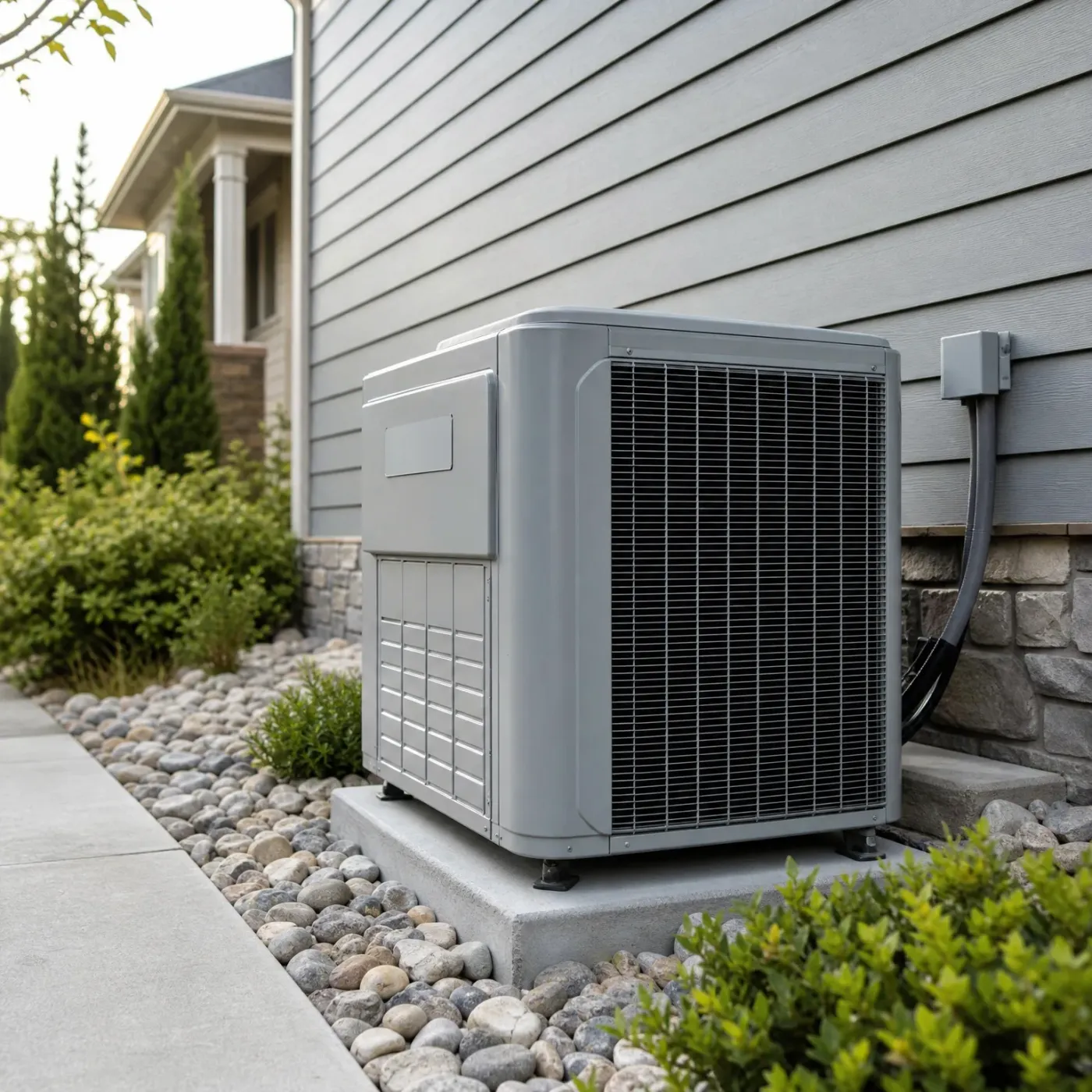
A gray outdoor heat pump unit on a concrete pad beside a house with light gray horizontal lap siding and a stone base, surrounded by river rock and shrubs next to a concrete walkway.

No calling every shop in Pennington County

The pro who gets in touch is licensed in South Dakota and works in Pennington County.

Describe the project once instead of to every installer.

Reach a local pro

No charge to send it. You decide if you hire them.

Why does your heat pump keep running when it's cold out

You'll hear the outdoor unit running long stretches on the cold nights, and the air coming out of the vents will feel cooler than you expect for a heat pump working that hard. Some homes notice the backup heat strips kicking on more often once it drops into the teens, and that shows up on the power bill. If the system is older, you might also notice it takes longer to recover after the thermostat is bumped up, or the unit ices over and runs a defrost cycle more than once an hour. Ignore it long enough and a strained reversing valve or an overworked compressor can fail outright, usually on the coldest night of the year, when you need the heat most.

A gray outdoor condenser unit on a concrete pad beside a house with horizontal lap siding, connected by conduit and lines to a wall-mounted disconnect box, with a shrub and gravel bed to the left.

Running the way it should

The outdoor unit cycles on, runs, and shuts off again without drawing your attention. Frost builds up on the coil in cold weather and clears on its own during a defrost cycle. The line set stays intact and the disconnect box is secure against the wall.


An outdoor air conditioner condenser unit on a concrete pad beside a light gray vinyl-sided house, with an electrical disconnect box and conduit on the wall and bare soil in the foreground.

Signs it's falling behind

Ice that doesn't clear after defrost, a unit that runs constantly without warming the house, or a disconnect box that feels warm to the touch all point to a system losing ground. At 13°F on a January night, a struggling heat pump falls back on strips and your bill shows it.

Why does a heat pump wear out faster in Rapid City than somewhere milder?

It's a fair question if you've talked to anyone who moved here from somewhere warmer and gets twice the years out of their heat pump. The difference isn't the equipment. It's what Pennington County asks it to do, night after night, for most of the year.

It runs harder, longer, and more often than it would somewhere mild

A heat pump in a mild climate moves heat back and forth a few months a year and coasts the rest of the time. Yours doesn't get that break. Nine months of heating load means the compressor and the reversing valve are working through more hours and more cycles every year than the same unit would log somewhere warmer. Cold nights push it into defrost more often, and backup heat strips carry the load when the outdoor coil can't pull enough warmth from the air. None of that is a flaw in the system. It's just more wear accumulating faster, year after year, which is why the same equipment that might stretch past 15 years in a mild climate tends to land earlier in the range here.

A gray outdoor condenser unit on a concrete pad beside a light-colored lap-sided house, with a wall-mounted disconnect box, refrigerant lines, mulch bed and shrubs, and a concrete walkway in the foreground.

Holding up fine

The unit sits level on its pad, lines running clean to the disconnect box. It cycles on, does its job, and shuts off without noise or fuss. Nothing iced over, nothing leaking, no sign it's straining against a Rapid City winter.

An outdoor condenser unit sits on a concrete pad beside a house with horizontal vinyl siding, with a gray electrical disconnect box and conduit on the wall and a shrub at left.

Starting to struggle

The disconnect box and line set look the same, but the unit itself is working too hard for what it's doing. Longer run times, weaker heat at the vents, maybe frost that doesn't clear. A sign the heat strips are carrying more of the load than they should.

A closed silver laptop and a white cup of coffee on a saucer sit on a wooden table in front of a wooden chair, a plain beige wall, a potted leafy plant and a window with greenery outside.

What this comes down to

A heat pump in Rapid City holds up for 10 to 15 years if it's sized right, installed right, and serviced every year. Pennington County winters decide where in that range your system lands. The install is what sets the heat strips, the refrigerant charge and the controls up to handle nights in the teens without grinding the reversing valve and the compressor down early.

Finding someone who installs these correctly for this climate usually means a string of calls, explaining the same situation to each one, then sitting on a handful of quotes trying to tell a good bid from a cheap one. You skip that here. One licensed Rapid City contractor who installs and services heat pumps through winters like these gets the request, sizes the job to your house, and gives you a straight quote. No round of calls, no repeating yourself, no pile of bids to sort through on your own.

A gray upholstered sofa with a beige cushion and knit blanket beside a curtained window, with a white mug and a book on a dark wooden table in the foreground and a lit lamp in the background.
A middle-aged woman with shoulder-length dark hair, wearing a gray cardigan over a cream top, sits in an upholstered armchair and looks toward a sunlit window, with a shelf holding framed pictures and a plant behind her.
A woman with her hair in a bun sits wrapped in a beige knitted blanket on a couch, holding a sleeping child against her chest in a warmly lit room with a lamp and houseplant in the background.

No quotes to chase

A Rapid City winter will use a heat pump hard no matter who installs it, but sizing and setup still decide whether yours sees 10 years or 15. Getting quotes usually means calling around, explaining your system more than once, and sorting through bids that are hard to compare. This connects you with one licensed, local contractor who installs heat pumps built for Pennington County winters and knows what tends to fail here first. No other companies calling, no repeating yourself.

Find a licensed heat pump pro

A licensed pro who works in Pennington County gets your request.

There's no charge for the request.




