Tell us about the job
Takes about a minute. No obligation.
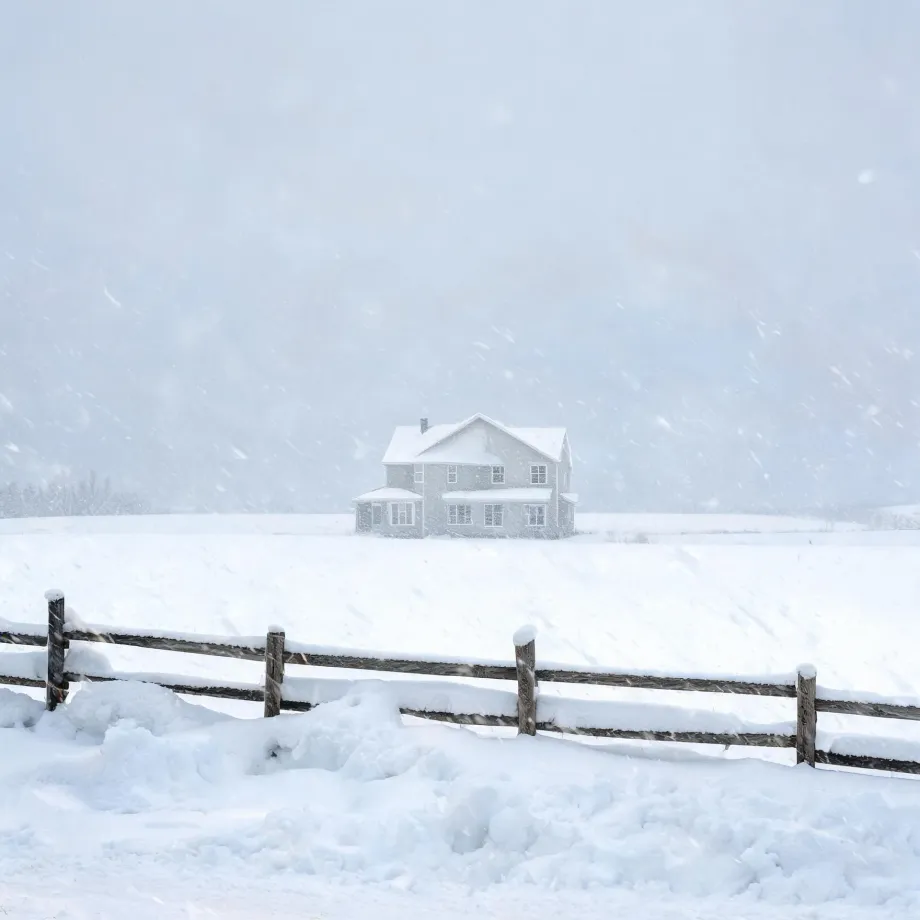
Sizing a heat pump for Grant County means working out exactly where outdoor temperatures drop the system's capacity below what the house needs. Homes in Grant County, SD run heat about nine months a year, from September through May. As temperatures fall hard through those months, a heat pump produces less heat precisely when the house demands more, and a contractor has to identify the balance point and spec backup heat accordingly. Get that calculation wrong at install and the backup strips carry a load they were meant to handle only rarely.
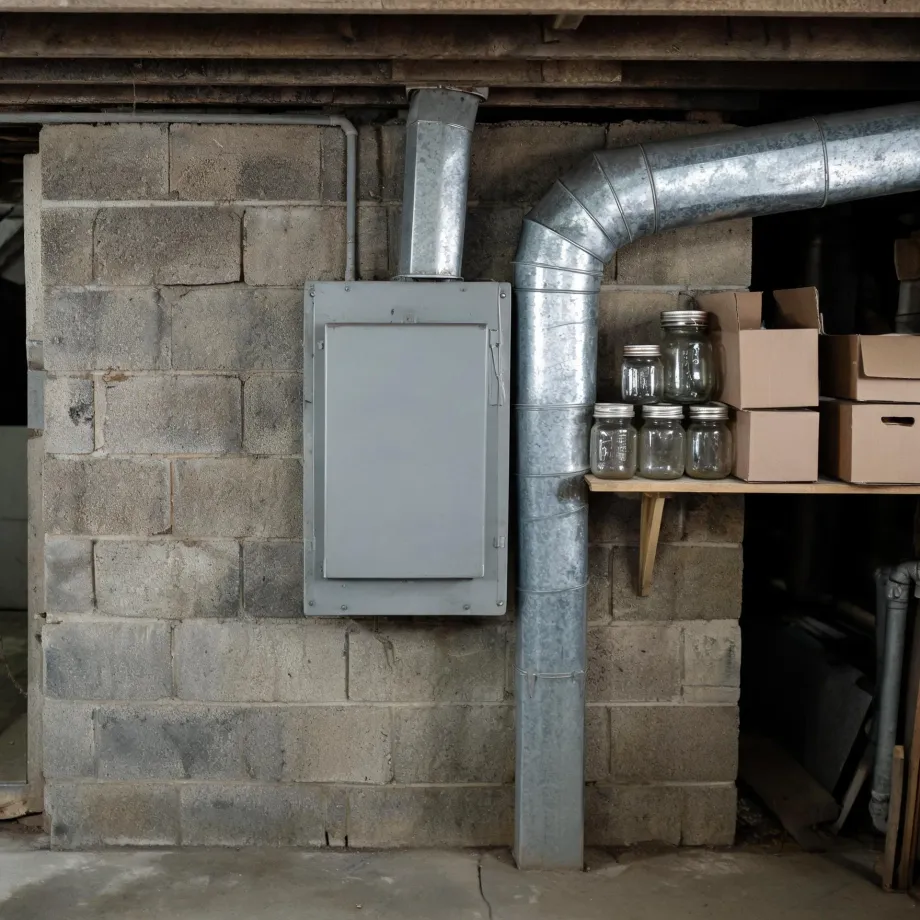
Ductwork laid out for a furnace and electrical service sized for a smaller load are what a heat pump installation turns on in much of this county. Half the homes in Grant County, South Dakota were built in 1972 or earlier (2020-2024 ACS 5-year). A contractor pricing the job has to trace what the existing ducts can carry and whether the panel will support the new draw before the equipment choice matters at all. Where those two things fall short, the duct runs and the service are what get quoted and addressed first.
What Gets Installed With a New Heat Pump
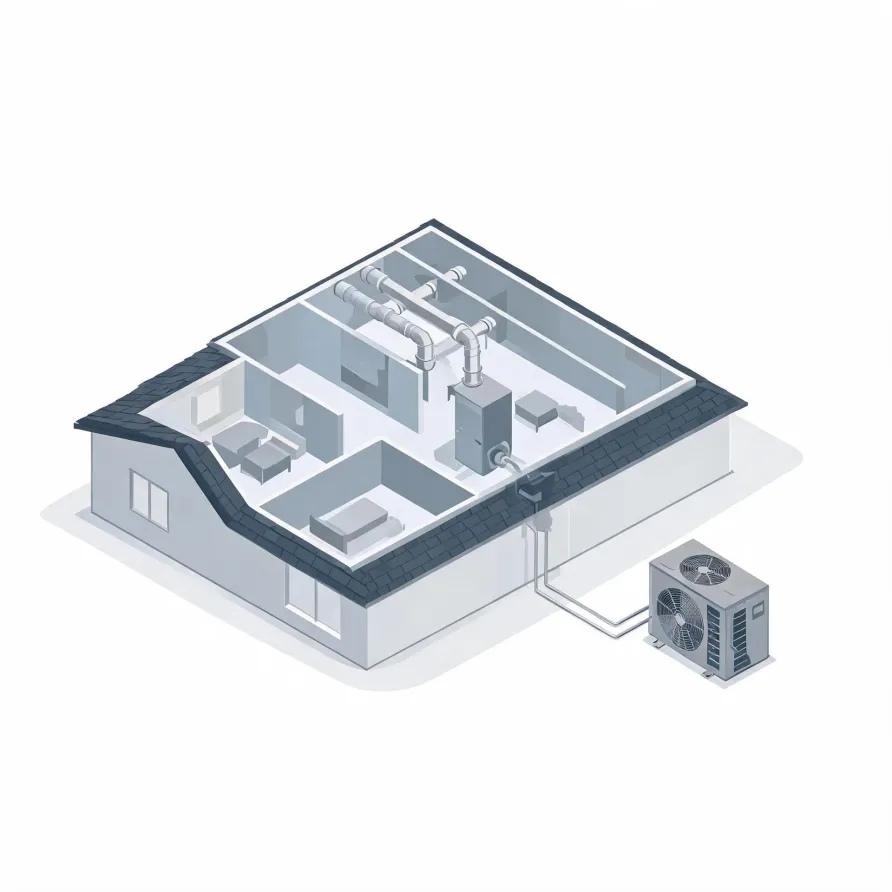
The outdoor unit is the piece a homeowner sees first, mounted on a concrete pad or wall bracket outside the house. It holds the compressor and the outdoor coil, and it is where heat gets pulled from or pushed into the outside air. Inside, the air handler sits in a mechanical room, basement, or utility closet and moves conditioned air through the home.
A refrigerant line set runs between the two units, carrying refrigerant back and forth through a pair of insulated copper lines. A thermostat mounts on an interior wall and serves as the control point for the whole system, telling both units when to run and in which direction.
The drawing shows a typical layout, and a licensed contractor determines exactly how each piece applies to your house.
Find a contractor in Grant CountyGrant County, South Dakota, by the numbers
132 severe weather events were recorded in Grant County, South Dakota between 2015 and 2024.
NOAA National Centers for Environmental Information, Storm Events Database, bulk CSV export, events 2015-01-01 through 2024-12-31.Half the homes in Grant County, South Dakota were built in 1972 or earlier (2020-2024 ACS 5-year).
U.S. Census Bureau, 2020-2024 American Community Survey 5-Year EstimatesGrant County, South Dakota holds 3,456 housing units (2020-2024 ACS 5-year).
U.S. Census Bureau, 2020-2024 American Community Survey 5-Year EstimatesOwners occupy 75.6% of the occupied homes in Grant County, South Dakota (2020-2024 ACS 5-year).
U.S. Census Bureau, 2020-2024 American Community Survey 5-Year EstimatesSevere Weather Events in Grant County
Heating and cooling equipment in Grant County works against whatever the local climate delivers, and that workload shapes which systems last and how they are sized. A heat pump specified for these conditions performs differently than one picked without that context.
132 severe weather events, 2015–2024. Source: NOAA National Centers for Environmental Information, Storm Events Database.